STKO 4.0.0: Transforming Structural Analysis with Powerful New Features
Structural analysis just got smarter with the release of STKO version 4. The update brings new tools that simplify workflows and improve accuracy: from better post-processing animations to advanced material modelling such as cohesive zones and bond-slip models, through to automatic mass assignment and constraint handling.
Enhanced visualisation and animation
- Shell extrusions: a visual representation of shell extrusions, previously limited to beam elements, makes models with shell-element cross-sections easier to read.
- Symmetrical models: new post-processing transformations let you mirror, scale, rotate or customise a model with a 3×3 matrix to reconstruct the entire structure, for example rebuilding a full cylinder from a quarter section. Transformations apply to the plots only, with no extra memory use.
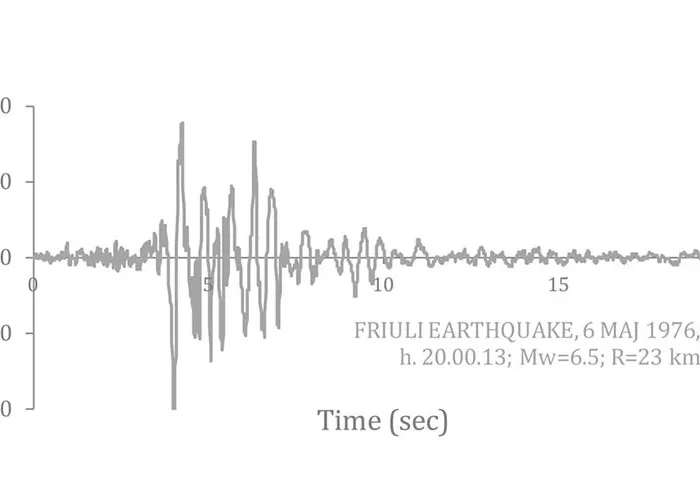
- Smarter animations: frame steps let you skip frames on large models, and parallel rendering produces smoother, better synchronised visuals.
Advanced material modelling
ASDConcrete3D now offers customisable parameters for masonry and other non-concrete materials. The Cross Damage Factor (CDF) controls dilatancy more effectively and avoids overestimating the shear strength of materials such as mortar in micro-models of bricks and mortar. In cyclic tests, ASDConcrete3D also shows a better pinched hysteresis than the older damage TC 3D model. The release also introduces ASDConcrete1D.
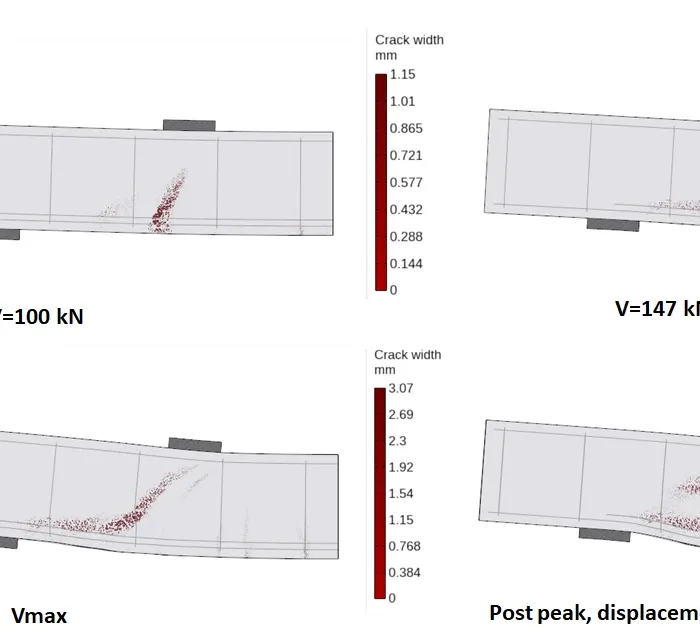
Cohesive zones in contact elements
Cohesive zones are now available for zero-length contact elements, to simulate thin adhesive or mortar layers. STKO automatically creates two zero-length elements, one for pure contact and one for the cohesive properties, with normal tensile strength, cohesion and fracture energy defined by the user.
Mass, constraints and materials
- Automatic edge mass: supply the material density and cross-section data, and STKO calculates the mass per unit length of beam elements or turns it into self-weight loads, cutting manual errors on buildings with hundreds of cross-sections.
- Auto Constraint Handler: single-point constraints are enforced with the transformation method, multi-point constraints with the penalty method, and the penalty value can be calculated automatically from the local stiffness.
- Parallel material wrappers: stack several material behaviours and sum their effects to build hybrid materials.
- Initial strain: apply predefined strains incrementally to simulate shrinkage, creep or thermal loads, and let cracks propagate more naturally without convergence issues.
Bond-slip models from code to practice
The new bond-slip model follows the Model Code 2020 for steel-concrete interaction. You can set the failure mode (pull-out or splitting), the bond conditions and the rib spacing: pull-out gives higher ductility and a residual strength plateau, while splitting fails earlier under poor bond conditions.
- Category
- News
- Year
- 2024
- Author
- ASDEA Software
STKO 4.0.0 requires OpenSees 3.7.0, which ensures that every new feature is fully functional and optimised.
You can download the installer from your user area on the ASDEA Software website. If you have any questions about STKO, contact us.
STKO 4.0.0 makes complex problems manageable while ensuring results remain precise and reliable.