The Importance of Seismic Design in Structural Engineering
Earthquakes cause billions of dollars in damage and countless injuries every year. Seismic design plays a pivotal role in the safety and resilience of buildings and infrastructure in earthquake-prone regions: structural engineers use advanced methodologies to mitigate the impact of seismic forces and protect lives and property.
Key principles
- Understanding seismic forces: a seismic hazard analysis of the area determines the expected ground motion and the forces structures may face.
- Building codes: compliance with codes specific to seismic design is essential to structural integrity.
- Ductility and redundancy: ductile, redundant structures deform without collapsing, and keep carrying loads even if one element fails.
Techniques
- Base isolation: decouples the building from ground motion and reduces the transfer of seismic forces.
- Energy dissipation devices: dampers that absorb seismic energy and minimise structural damage.
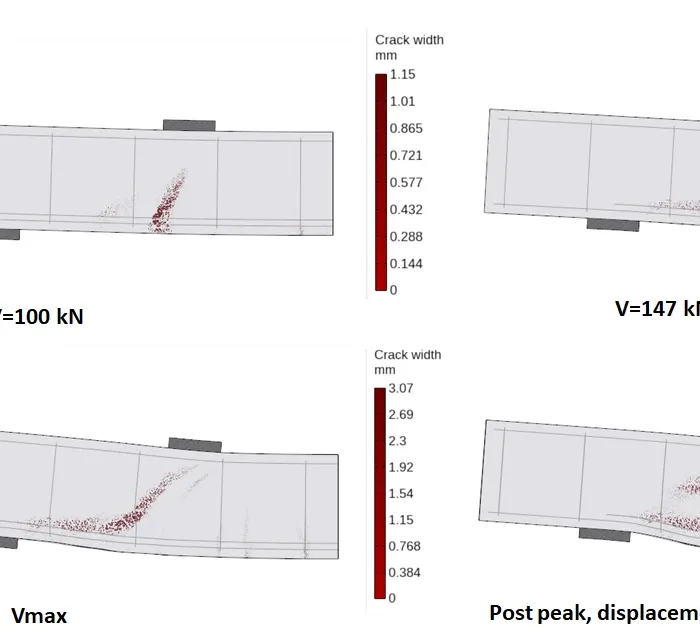
- Capacity design: a hierarchy of strength makes certain elements yield and dissipate energy in a controlled way, while critical components remain elastic. It requires careful detailing, so that the “damage path” follows the intended sequence.
The role of advanced simulations
Tools such as STKO for OpenSees and the MonStr system let engineers predict how structures will respond to seismic forces, controlling damage evolution along the path intended by capacity design, and assess performance under different earthquake scenarios, refining the design so that damage stays within acceptable limits.
STKO and MonStr side by side
- Core functionality: STKO is the advanced GUI for OpenSees, with pre and post-processing, CAD modelling and Python scripting; MonStr provides advanced seismic monitoring and analysis for safety assessment.
- Damage path tracking: STKO visualises, analyses and verifies the evolution of damage under seismic loading; MonStr enables its real-time monitoring and control.
- Customisation: STKO offers a Python API for custom tools, parametric studies and AI integration; MonStr offers flexible monitoring options for a wide range of seismic scenarios.
- Scalability: STKO supports models with millions of degrees of freedom and parallel processing; MonStr is designed for complex structures and detailed performance assessment.
- Visualisation: STKO produces charts, plots and animations to interpret results; MonStr visualises damage evolution and structural response.
- Category
- Publications & White Papers
- Year
- 2025
- Author
- ASDEA Software
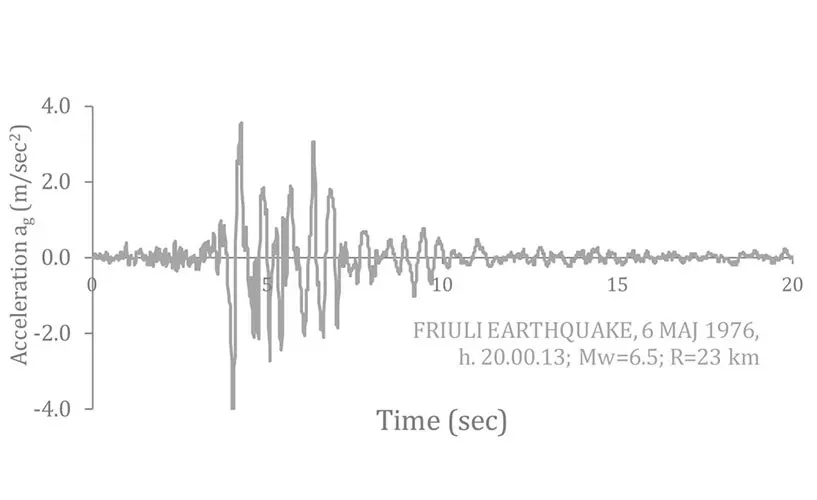
By integrating these principles, engineering techniques and advanced simulation tools such as STKO for OpenSees and the MonStr system, structural engineers can design and verify earthquake-resistant structures with accuracy. These technologies do not just predict structural performance; they also allow real-time control and verification of damage evolution, so that structures withstand seismic events and safeguard lives and property in high-risk regions.
Capacity design directs the damage to predefined elements, preventing catastrophic failure.